A November hike in the Adirondacks deserves a fresh route check, even if the trail was clear during foliage season. In its October 29 backcountry update, New York’s Department of Environmental Conservation reported prevalent ice at higher elevations and identified a trail obstruction in the Lake George Wild Forest.
Those are dated reports, not a forecast for the day you go. Check DEC’s latest notices and the forecast for your actual route before leaving, and be ready to choose a different trip if conditions exceed your experience or equipment.
Ice and a difficult trail
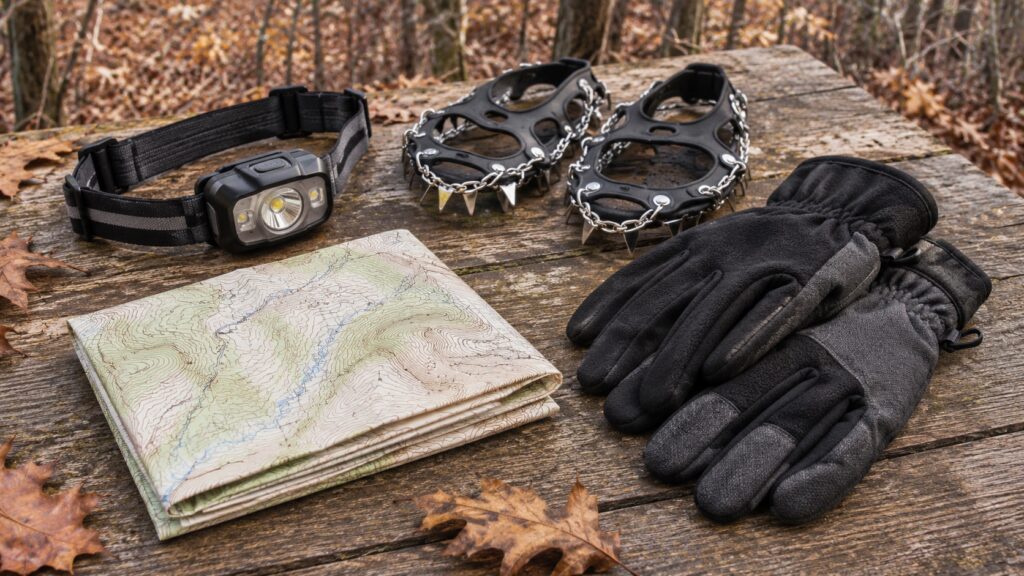
DEC says traction devices and warm layers are needed in the higher elevations of the High Peaks. Its backcountry guidance notes that ice can occur both above and below treeline. The department also advises against attempting the Trap Dike on Mount Colden because thin ice makes conditions extremely hazardous.
In the Lake George Wild Forest, DEC reported blowdown near the summit of Thomas Mountain on the Thomas Ridge Spur Trail, making navigation difficult. The notice advises caution. It does not describe a verified detour, so do not assume a route around the obstruction is established or suitable.
Plan for the day you will be out
Check the mountain-point forecast and the location-specific DEC trail notices as close to departure as practical. Look at sunset for your trip date and leave a margin for the return; the clock and available daylight have changed since late October. Bring a headlamp, a map, warm layers, extra food and equipment appropriate to the route and conditions. DEC recommends preparing for an unplanned night outdoors.
Conditions can change between updates and during a hike. A shorter or lower-elevation alternative can be the better choice when the forecast, trail notice or conditions on arrival do not match the plan. For current closures and detailed notices, return to DEC’s Adirondack backcountry information.
Featured image: AI-generated editorial illustration of hiking preparation, not a photograph of current trail conditions.