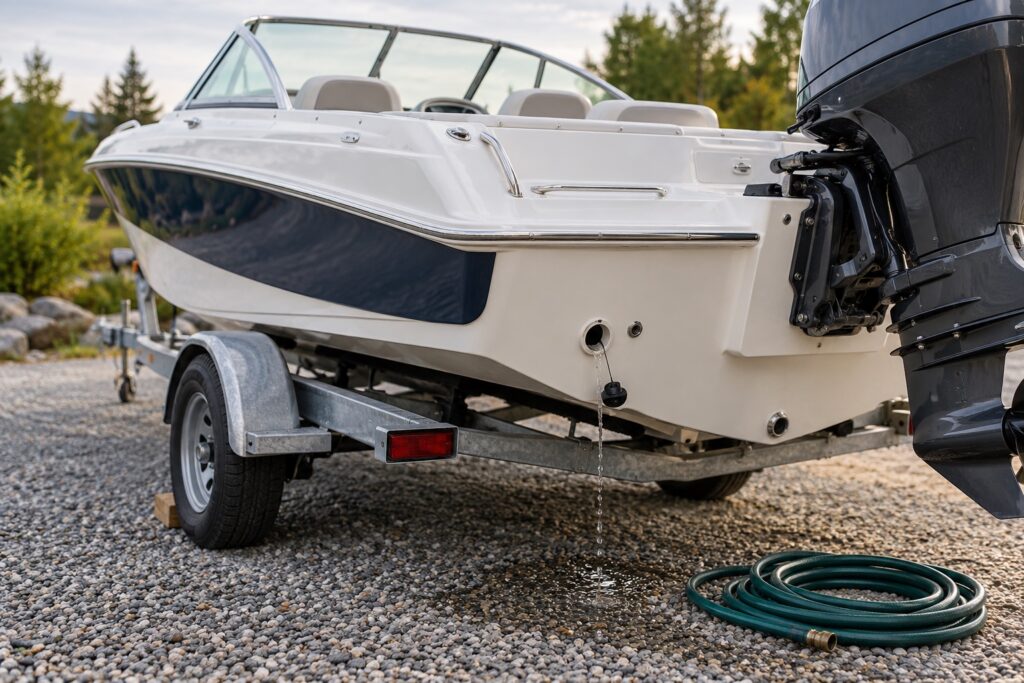
AI-generated editorial illustration; not a photograph of a specific property or project.
A waterfront buyer can spend considerable time reviewing deeded lake access, dock rights and shoreline permits while missing a separate operating requirement: whether a trailered motorboat must be inspected or certified before it launches. The answer matters for people who plan to bring boats to the Adirondacks rather than keep one in the water all season.
New York requires a clean, drained and dry approach to help prevent aquatic invasive species from moving between waterbodies. For motorized watercraft launching in the Adirondack Park and within the state’s specified surrounding area, the program includes a certificate requirement. The rule attaches to the boat-launch activity, not to whether someone owns the adjoining home.
Owning waterfront property does not remove the launch rule
The Department of Environmental Conservation’s aquatic invasive-species regulations describe the certification framework. Before launching a motorized watercraft in the covered Adirondack area, the operator must have a valid certificate documenting that the boat and equipment have been inspected or appropriately cleaned, drained and dried. A certificate can be issued by an authorized inspection steward or completed through the applicable self-certification process when the requirements are met.
For a family driving to Schroon Lake with a powerboat from a different waterbody, that deserves a place on the arrival checklist alongside trailer registration, launch access and insurance. It is particularly important when boats move between lakes over the course of a vacation.
The details are different from shoreline building permits or private association rules. A deeded dock right does not automatically provide public ramp access, marina storage, a boat slip of a particular size or an exemption from aquatic protection regulations.
What to check when buying the lake house
I would ask where the boat can actually be launched, whether the claimed dock or mooring rights are deeded or merely permitted, and who controls any shared waterfront facilities. Confirm water depth, seasonal access and any applicable association or municipal rules rather than relying on photos of a boat tied to the seller’s dock.
Owners should also distinguish between a boat that remains stored in the water and one that is repeatedly moved between lakes. The specific cleaning and certification steps depend on the launch and watercraft, so review DEC’s current guidance before each season rather than relying on an old campground handout.
Why this belongs in buyer due diligence
For some households, straightforward launching and storage are central to the property’s utility. If a large boat cannot reasonably use the access available, the house may not meet the buyer’s intended use, regardless of the view from the deck. A seller should document any transferable access or storage arrangements and avoid promising rights that actually belong to a separate operator.
An Adirondack waterfront purchase is a combination of land, structures, access and operating rules. I would verify all four. For related regional property questions see TopNetRealty’s New York Insights.
Primary source: NYS DEC, Invasive Species Regulations.
Sources checked October 28, 2026.