A newer furnace or heat pump tells you how a house is heated today. When buying an older Saratoga County home, also establish what happened to the equipment it replaced. An old oil tank, an unexplained fill pipe or a missing removal record deserves attention while there is still time to investigate.
This is not a reason to dismiss every oil-heated property. It is a reason to separate a working heating system from the history of fuel storage on the land.
Follow the tank history
Ask the seller for the current tank’s age and location, service records, and any documentation for earlier tanks. If the house changed fuels, request the contractor’s conversion invoice and records describing removal or abandonment of the former tank. A receipt for the new heating equipment may say nothing about the old storage system.
New York’s Department of State conversion notice describes tank and piping work, inspection, retained abandonment records, and notice to the oil supplier when converting fuels. It also notes that local requirements may apply. Use it to frame questions for the contractor and municipal code office, rather than treating an invoice marked “tank closed” as a complete answer.
Match the records to the property. Do they identify the tank’s location and size? Do photographs show the work? If testing or cleanup occurred, are the reports present? Ask your inspector or an environmental professional to explain what the documents establish and what they leave open.
Look at the current system separately
DEC’s home-heating safety guidance recommends annual tank inspections and identifies concerns such as corrosion, wet spots, unstable supports and signs of leakage. Its checklist is a prompt for professional service, not a substitute for an inspection. An attractive finished basement should not keep a buyer from looking carefully at the tank and accessible piping.
Where there is a suspected former underground tank or evidence of a release, agree on the scope of further investigation before work begins. The owner must authorize access and testing. Let the qualified contractor determine the appropriate methods and permits; digging around an old pipe is not a buyer’s inspection project.
Ask the insurance agent directly about coverage for the actual fuel system and any known history. Do not assume the policy that covers ordinary household damage also covers an oil release. DEC warns that spills can affect basements, soil and water and that cleanup may not be covered by homeowners insurance.
Resolve the uncertainty before assigning a credit
A modest credit can look reasonable when everyone assumes the issue is simply removing an empty tank. It is a different negotiation if the tank’s location, condition or surrounding soil has not been established. Have your attorney address investigation deadlines, responsibility for work, documentation and the consequences of unresolved findings in the contract.
Sellers can make this easier by assembling the file before listing. Keep the useful records together instead of relying on a recollection that a prior owner handled it years ago. Our New York seller preparation guide explains how that fits into the broader property file.
The closing decision should rest on a known current system and a documented history of the old one. That gives buyer and seller something concrete to price, insure and discuss with their advisers.
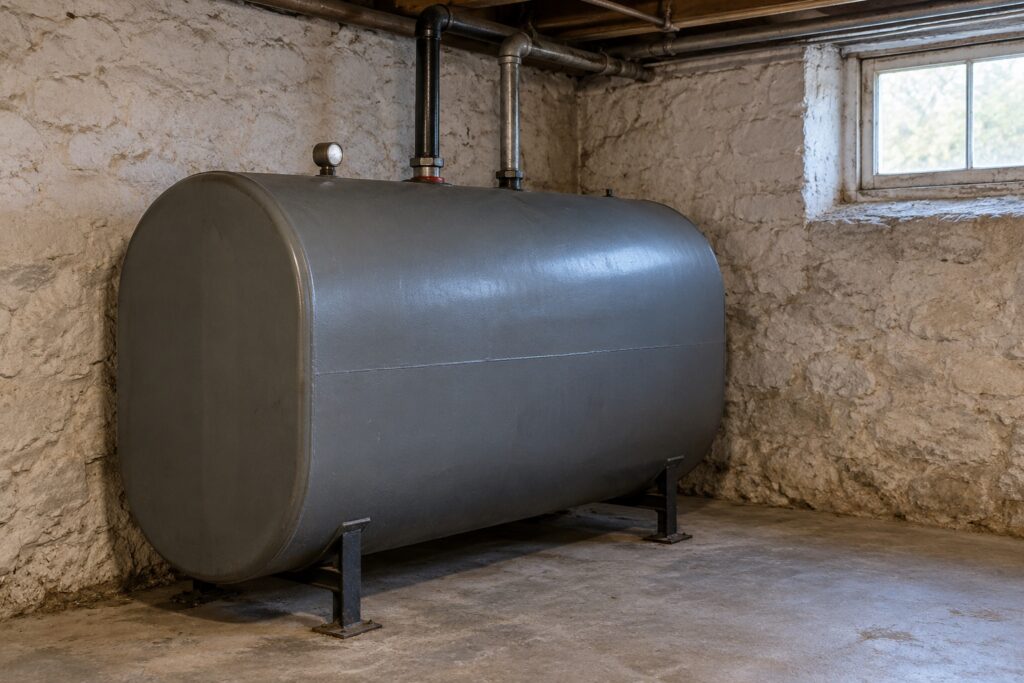
AI-generated editorial illustration of a residential heating oil tank; not an inspection or photograph of an actual property.
Sources checked October 20, 2026.