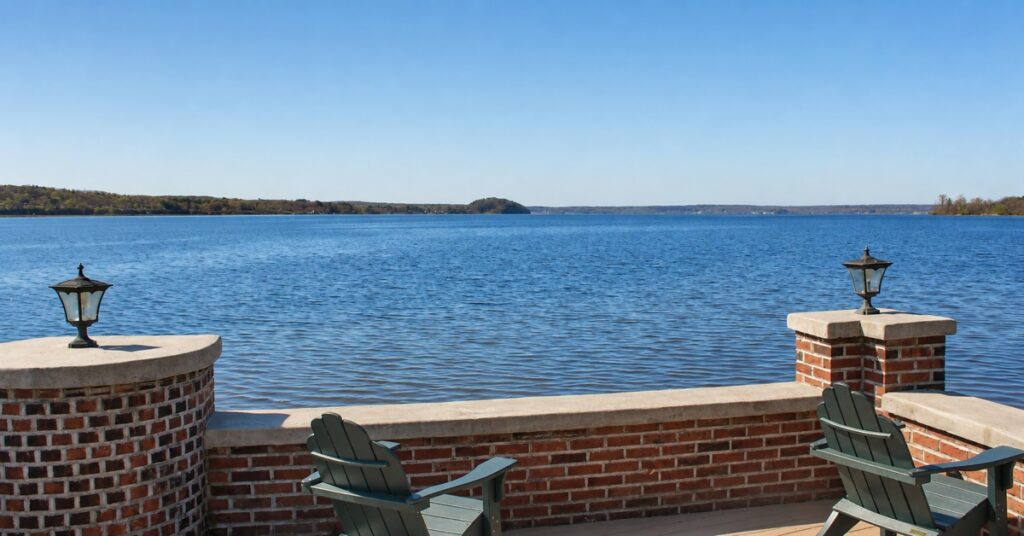
A house can have a Saratoga Lake view, beach access and a rented boat slip, with a different set of documents governing each. Before comparing properties, find out how you would get to the water, what you could do there and whether that arrangement would continue after the sale.
Updated October 10, 2026.
What comes with the property?
Ask the seller to identify the land, access rights and separate agreements included in the offering. Have your attorney review the documents for permitted uses, transferability, shared responsibilities and restrictions. An established walking path or a dock the seller uses needs the same scrutiny as any other advertised feature.
Then walk the route with permission. A road crossing, steep steps or a long carry can affect how often you use the water. Check where equipment would be stored and whether the arrangement works for your boat, swimmers and guests.
| Arrangement | What to establish | Useful records |
|---|---|---|
| Direct frontage | The owned and usable shoreline, shared rights and existing dock approvals. | Deed, survey, title exceptions and permit records. |
| Separate waterfront parcel | Whether both parcels are included and how you reach the water across the road. | Both deeds and tax IDs, survey and access agreements. |
| Deeded access | The route, permitted users and activities, and maintenance obligations. | Recorded easement, amendments and survey. |
| Association access | Which facilities this property qualifies to use and the rules and fees that apply. | Declaration, bylaws, current rules and membership records. |
| Rented marina slip | Availability, boat restrictions, renewal terms and whether the agreement can transfer. | Slip contract and marina rules. |
| Lake view | Whether any water access is included and what could affect the view. | Deed, survey, restrictions and nearby development records. |
Start with the right municipality
Saratoga Lake borders four municipalities: the City of Saratoga Springs on the northwest, Malta on the southwest, Stillwater on the southeast and the Town of Saratoga on the northeast. SLPID’s geography overview provides the orientation. A Saratoga Springs mailing address does not settle jurisdiction or school assignment.
Find the tax-map parcel number in the county assessment database, then match it to the deed, survey and tax bills. Confirm school boundaries by address. Use municipal building and planning records to check permits, approved use and proposed changes; use a survey and title review to resolve boundaries and access.
This distinction matters if rental income is part of the purchase plan. The City’s short-term rental guidance requires annual licensing for rentals under 30 consecutive days and says an application alone is not a license. For a property in one of the towns, check that town’s rules. Association restrictions require a separate review. Our Saratoga County property-research guide explains where to begin.
Check the dock, the depth and the season
Obtain the dock plans, permits and repair records, and compare them with the installation. Ask who puts the dock in, removes it and stores it. Before planning a replacement, stairs or shoreline work, confirm requirements with the municipality and DEC. DEC’s guidance explains that an exemption from one permit does not remove every other possible approval.
SLPID’s dock page still contains draft-law language. Obtain the enacted requirements for the parcel and proposed work rather than relying on the draft’s dimensions or fees.
Saratoga Lake is a natural lake whose level is regulated by a privately owned dam on Fish Creek. SLPID describes a late-October lowering and weather-dependent winter levels. Ask about depth at the dock and along the boat’s approach across the season. A lake-wide depth figure cannot answer that question.
Public facilities have their own schedules. As checked October 10, State Parks lists a boat-launching season of April 1 through November 1 at the Route 9P state launch. Brown’s Beach lists its beach and private docks as closed for 2026. Its private marina is separate from public beach access. Check operators’ current notices when planning a visit; neither facility establishes lake access from a nearby house.
Water’s Edge/Woodlands: verify the particular home
Water’s Edge/Woodlands includes single-family homes and townhomes. Its official amenities page describes a private beach and marina, indoor and outdoor pools, fitness facilities, tennis and pickleball. Those facilities are a reason to examine the association documents early.
Confirm the property’s memberships, dues, maintenance responsibilities and amenity eligibility. Review the budget, reserves and any pending assessments, along with rental and guest rules. If a marina slip is essential, obtain a written, property-specific answer about allocation, any waiting list, charges, vessel limits and transferability. The seller’s slip arrangement may not continue after closing.
Look beyond summer use
For a seasonal house, review occupancy and permit records alongside the physical inspection. Heating, insulation, plumbing freeze protection and winter road access all matter if you intend to stay year-round. Price conversion work only after checking zoning, wastewater capacity and approvals.
Establish the actual water supply and wastewater system. Request bills and connection records, or well and septic documentation, and confirm service with the provider. Saratoga County Sewer District 1 is a starting point where applicable. A nearby sewer main does not prove a house is connected; ask who maintains the lateral or private equipment.
Screen the address through the FEMA Flood Map Service Center, then review drainage, water-entry history and insurance for the actual property and intended use. Being outside a mapped high-risk area does not rule out flooding. A visit after rain can also help you see how water moves across the lot.
Water quality is part of the purchase
Use DEC’s current harmful algal bloom resources and SLPID’s lake information when planning time on the water. Historical reports are not a current advisory, and a bloom may be present before it is reported. Follow official guidance and avoid suspected blooms. The Saratoga Lake Association offers additional context on watershed stewardship and community involvement.
Compare the whole ownership cost
Use closed sales with comparable access arrangements, frontage, location and condition. A broad lake-area average can mix direct waterfront with association access or a view-only property. When comparable sales are limited, make those differences explicit.
Build the budget from actual tax bills, insurance quotes, association charges and maintenance estimates. Include dock installation and removal, slip rent or boat storage, shoreline work, private-road costs and winterization where relevant. Check assessments and seller-specific tax exemptions rather than assuming the seller’s bill will be yours.
Resolve a critical access, slip or use requirement before depending on it in an offer. The New York offer guide explains the next stage with your agent and attorney.
Sources
Sources checked October 10, 2026. Use current agency and operator information for access, conditions and requirements.
- SLPID: lake geography and levels Seasonal level management; the linked lake-information pages identify the four municipalities.
- New York State Parks: Saratoga Lake State Boat Launch Posted boat-launching season and facility information.
- Town of Stillwater: Brown’s Beach Current seasonal notices and the distinction between beach access and the private marina.
- Water’s Edge/Woodlands official amenities Community facilities; eligibility and slip arrangements require property-specific confirmation.
- DEC: Protection of Waters Permit guidance for shoreline and in-water work.
- City of Saratoga Springs: short-term rentals City licensing guidance; requirements elsewhere must be checked with the applicable municipality.
- DEC: harmful algal blooms Current reporting resources and bloom guidance.
Have a Saratoga Lake property in mind?
Considering a home on Saratoga Lake? Send us the address and tell us how you want to use the property. We’ll help you identify the questions to resolve before you move forward.
This article provides general real estate information, not legal, tax, lending, environmental, engineering, inspection, accessibility, or investment advice. Requirements and property conditions vary. Confirm current information through the applicable public agency, transaction documents, and appropriately qualified professionals. Browsing, reading, or submitting an inquiry does not by itself create a brokerage, agency, fiduciary, or client relationship.