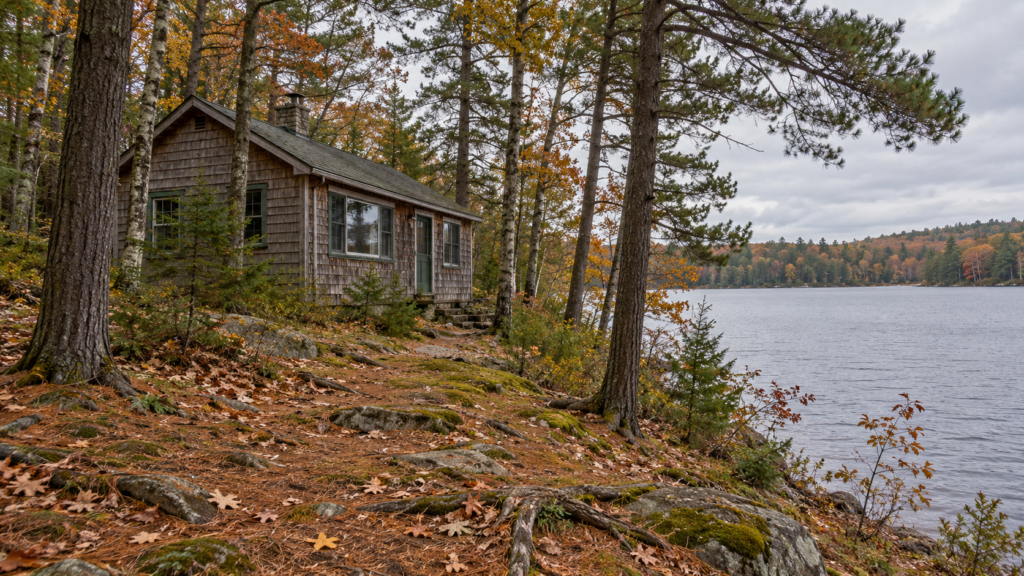
The cabin is small, but the setting works. Add a bedroom, enlarge the kitchen, and it could be the house you are looking for.
Before making an offer based on that plan, find out whether the addition is allowed. An existing house near the water does not, by itself, settle what can be built next.
The starting point is the shoreline, not the lawn
The Adirondack Park Agency’s shoreline rules measure setbacks from the mean high water mark, not simply from the water’s edge on the day you visit.
For new structures exceeding 100 square feet, the agency lists minimum setbacks of 50 feet in Hamlet and Moderate Intensity Use areas, 75 feet in Low Intensity Use and Rural Use areas, and 100 feet in Resource Management areas. These restrictions can apply even when a separate agency land-use permit is not required.
An older, lawfully existing house inside the setback requires a different review. Certain increases in its dimensions need a variance. The agency also describes limited exceptions, including an increase of up to two feet in height and/or 250 square feet of footprint to the rear of a lawfully existing single-family dwelling. Do not treat either the general restriction or the exception as an approval for your particular design.
Ask about the addition you actually want
A useful inquiry is specific: the parcel, the existing building, its distance from the shoreline, and the proposed footprint and height. “Can this house be expanded?” leaves too much unanswered.
Gather the survey, available building plans, prior agency permits or determinations, municipal approvals, and recorded restrictions. Include any proposed change in use or occupancy in the review. Ask the local permitting office which other questions, including wastewater capacity, need to be addressed.
For a written answer about whether a proposal needs agency review, the Adirondack Park Agency directs owners and applicants to its jurisdictional inquiry process. That answer is a step in the review, not a substitute for every other approval.
My advice is to value the house that exists today. Treat an unapproved addition as a proposal, not extra living space you have already bought. When that addition is essential to the purchase, resolve the question during due diligence with your attorney and the relevant agencies.
Talk through an Adirondack property purchase with TopNetRealty.
Featured image: AI-generated editorial illustration, not a specific property.